Marie and Pierre Curie announce the isolation of radium.


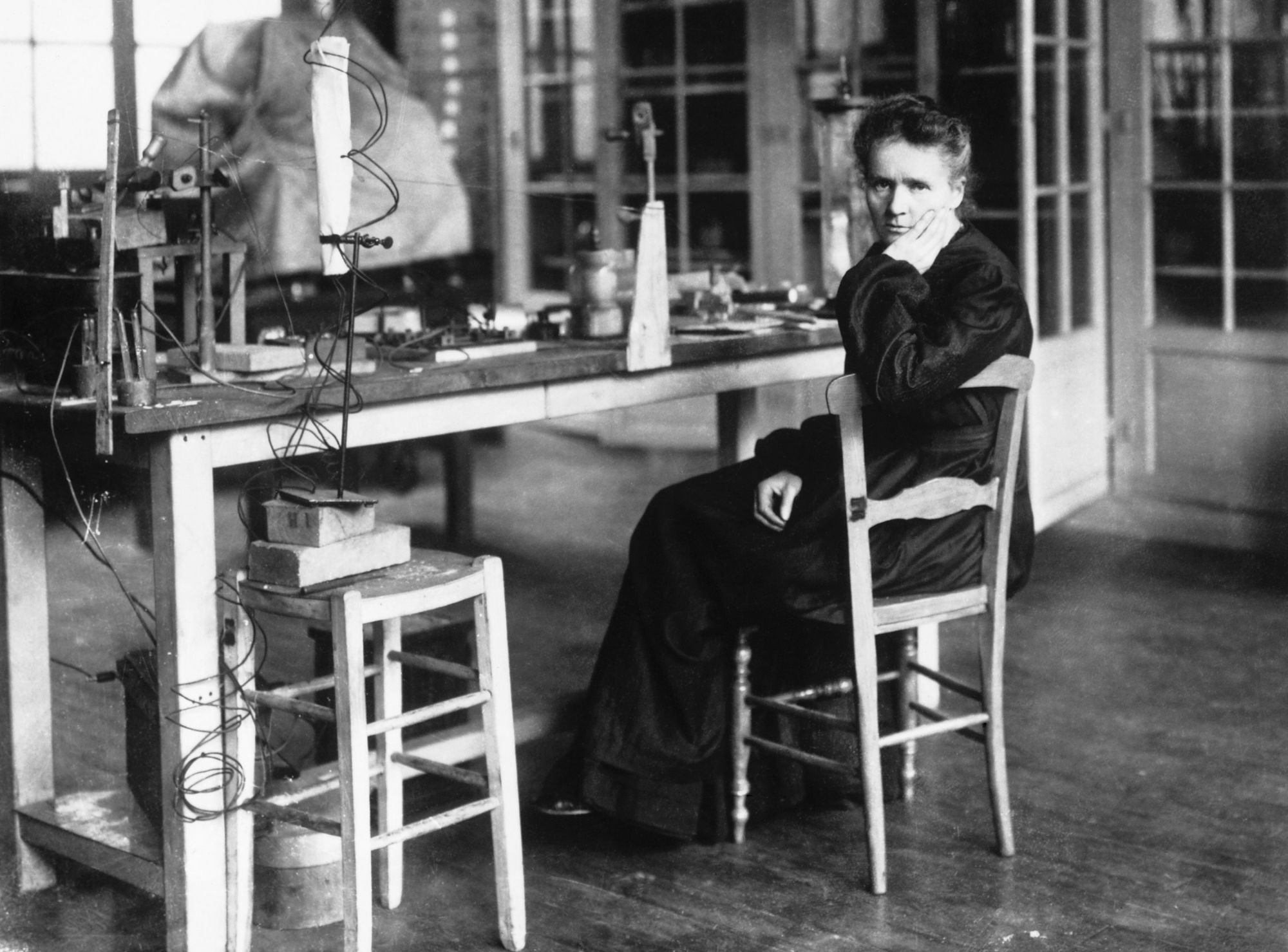
Marie Curie and Pierre Curie were among the most influential scientists of the late 19th and early 20th centuries, best known for their groundbreaking work on radioactivity. Marie, born in Poland as Maria Sk?odowska, moved to Paris to pursue higher education at a time when women faced significant barriers in science. Pierre, a French physicist, had already earned respect for his research in crystallography and magnetism. Their meeting in Paris marked the beginning of both a scientific partnership and a deep personal bond.
Together, the Curies investigated mysterious radiation emitted by uranium, a phenomenon that Marie later named “radioactivity.” Their meticulous experiments led to the discovery of two new elements, polonium (named after Marie’s homeland) and radium. This work required extraordinary patience, as they processed tons of pitchblende ore under harsh conditions, often with minimal safety measures. Their findings fundamentally changed the understanding of atomic physics and opened new directions in chemistry and medicine.
In 1903, Marie and Pierre shared the Nobel Prize in Physics with Henri Becquerel for their research on radiation, making Marie the first woman to win a Nobel Prize. Pierre’s sudden death in 1906 was a devastating blow, both personally and professionally, but Marie continued their work with remarkable determination. She later won a second Nobel Prize, this time in Chemistry in 1911, becoming the only person ever to receive Nobel Prizes in two different scientific fields.
Beyond their discoveries, the legacy of Marie and Pierre Curie lies in how their work reshaped science and society. Their research paved the way for medical applications such as cancer radiation therapy, while also influencing nuclear physics and energy research. Marie’s role as a pioneering woman in science inspired generations to challenge social and academic limitations. Together, the Curies remain symbols of intellectual curiosity, perseverance, and the profound impact that collaborative science can have on the world.